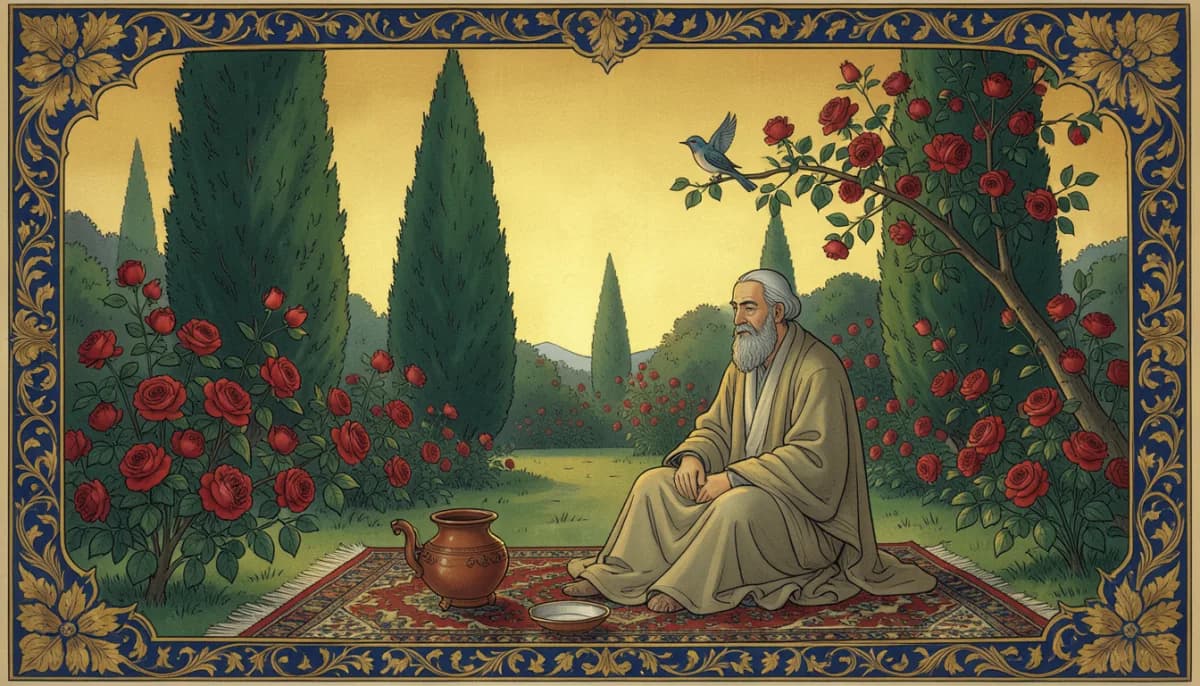
غزل شمارهٔ ۵
Hafez · Ghazals
دل میرود ز دستم صاحبدلان خدا را
دردا که راز پنهان خواهد شد آشکارا
کشتیشکستگانیم ای بادِ شُرطِه برخیز
باشد که باز بینم دیدارِ آشنا را
دهروزه مِهرِ گردون افسانه است و افسون
نیکی به جای یاران فرصت شمار یارا
در حلقهٔ گُل و مُل خوش خواند دوش بلبل
هاتِ الصَّبُوحَ هُبّوا یا ایُّها السُّکارا
ای صاحبِ کرامت شُکرانهٔ سلامت
روزی تَفَقُّدی کن درویشِ بینوا را
آسایشِ دو گیتی تفسیرِ این دو حرف است
با دوستان مُرُوَّت با دشمنان مُدارا
در کویِ نیکنامی ما را گذر ندادند
گر تو نمیپسندی تغییر کن قضا را
آن تَلخوَش که صوفی اُمُّالخَبائِثَش خواند
اَشهیٰ لَنا و اَحلیٰ مِن قُبلَةِ العَذارا
هنگامِ تنگدستی در عیش کوش و مستی
کاین کیمیایِ هستی قارون کند گدا را
سرکش مشو که چون شمع از غیرتت بسوزد
دلبر که در کفِ او موم است سنگِ خارا
آیینهٔ سِکَندر جامِ مِی است بنگر
تا بر تو عرضه دارد احوالِ مُلکِ دارا
خوبان پارسیگو بخشندگانِ عمرند
ساقی بده بشارت رندانِ پارسا را
حافظ به خود نپوشید این خرقهٔ مِیْآلود
ای شیخِ پاکدامن معذور دار ما را
What this poem says
This poem by Hafez gives voice to states of love, pain, and the beauties of life. The poet tells of losing his heart and of hidden secrets, his own heart fluttering at the memory of familiar reunions. He touches on the instability of the world and of friendships, and speaks of kindness toward friends and forbearance toward enemies. Hafez likewise stresses taking pleasure in life even in hard circumstances, and underscores the importance of gratitude and affection in our dealings with others. Finally, he points to the challenges that exist in life and the need to accept them with a positive spirit, reminding us that even in hardship, one must live joyfully.
A prose synopsis, not a translation of the verse. Translated from Ganjoor’s machine-generated Persian summary.