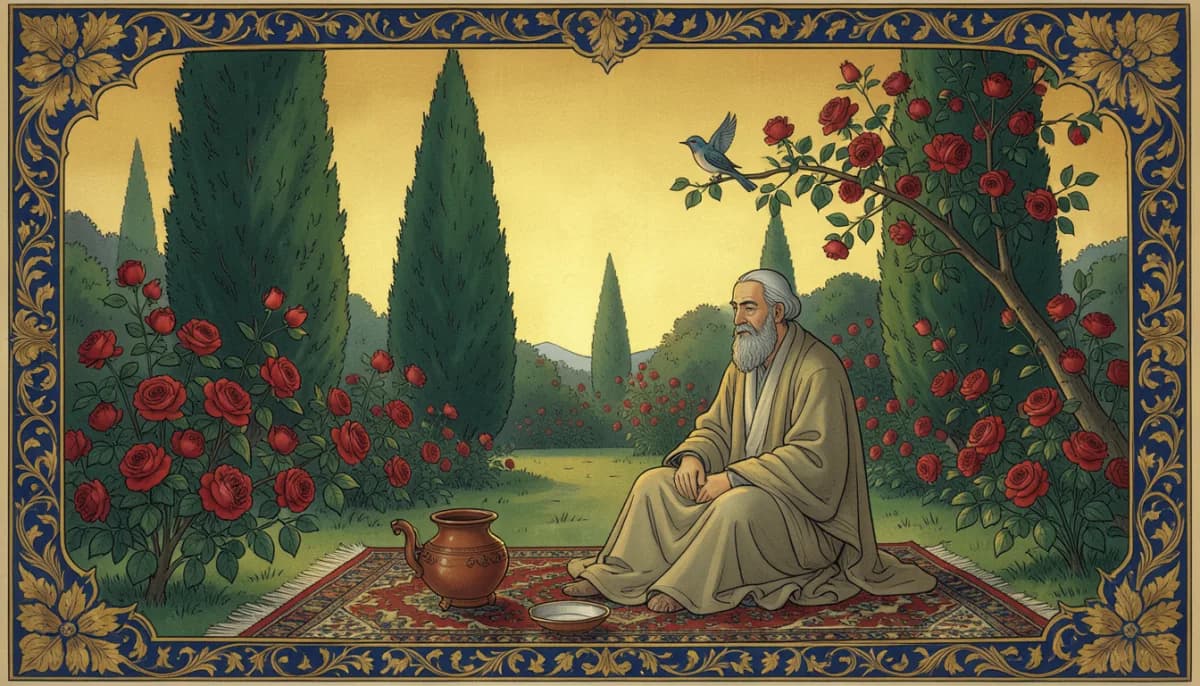
غزل شمارهٔ ۷
Hafez · Ghazals
صوفی بیا که آیِنِه، صافیست جام را
تا بِنگَری صَفایِ مِیِ لَعلفام را
رازِ درونِ پَردِه زِ رِندانِ مَست پُرس
کاین حال نیست زاهِدِ عالیمَقام را
عَنقا، شِکارِ کَس نَشَوَد، دام بازچین
کآنجا، همیشه، باد به دست است، دام را
دَر بَزمِ دُور، یکدو قدح دَرکَش و برو
یَعنی طَمَع مَدار وِصالِ مُدام را
ای دل! شَباب رَفت و نَچیدی گُلی زِ عِیش
پیرانهسر مَکُن هُنَری نَنگ و نام را
در عِیشِ نَقد کوش که چون آبخَور نَمانْد
آدَم بِهِشت، روضِهٔ دارُالسَّلام را
ما را بَر آستانِ تو، بس حَقِّ خِدمَت است
ای خواجه! بازبین به تَرَحُّم غلام را
«حافظ» مُریدِ جامِ مِی است، ای صبا! برو!
وز بنده بندگی بِرَسان شِیخِ جام را!
What this poem says
Addressing the Sufis, the poet tells them to seize the cup of wine — a clear, pure mirror — and to seize the wine itself, red as a jewel. He holds that these special secrets are known to the drunken rend, not to lofty ascetics who have never reached such a rank; at that rare rank no one can trap the Anqa, the fabled phoenix, by cunning or snare, and once you attain it, take a cup or two and go your way, without expecting union to last forever. At the end, the poet voices his own courtesy and reverence toward the cup of wine, and sends greetings to the sheikh who holds the cup (or perhaps a sheikh from a place called Jam).
A prose synopsis, not a translation of the verse. Translated from the Persian summary.