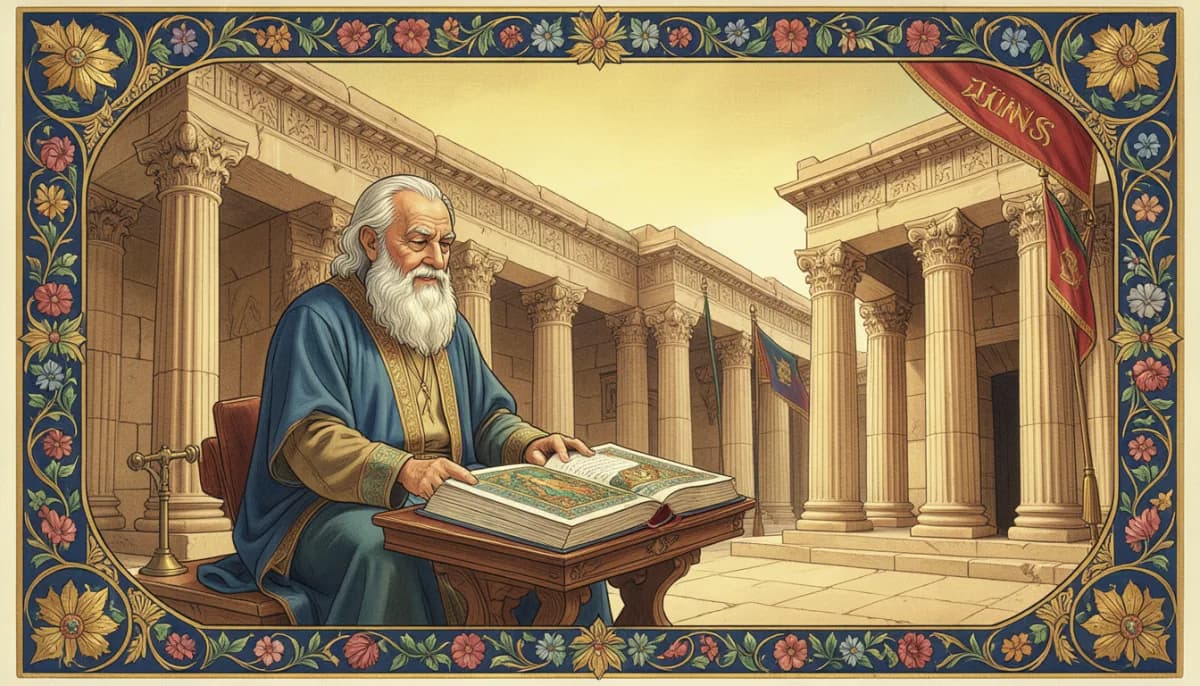
بخش ۱ - آغاز کتاب
Ferdowsi · Shahnameh
به نام خداوندِ جان و خرد
کز این برتر، اندیشه، بر نگذرد
In the name of the Lord of soul and wisdom, beyond whom no thought can ever pass.
خداوندِ نام و خداوندِ جای
خداوندِ روزیدِهِ رهنمای
خداوندِ کیوان و گَردانسپهر
فروزندهٔ ماه و ناهید و مِهر
ز نام و نشان و گمان، برتر است
نگارندهٔ بَرشده، پیکر است
به بینندگان، آفریننده را
نبینی، مرنجان دو بیننده را
نیابد بِدو، نیز، اندیشه، راه
که او برتر از نام و از جایگاه
سخن، هر چه زین گوهران، بُگذرد
نیابد، بِدو راه، جان و خرد
خرد، گر سخن، برگزیند همی
همان را گزیند که بیند همی
ستودن، نداند کس او را، چو هست
میانْ بندگی را، ببایدْت بست
خرد را و جان را همیسَنجد، اوی
در اندیشهٔ سَخته کِی گُنجد اوی؟
بدین آلتِ رای و جان و زبان
ستود آفریننده را، کِی توان؟
به هستیش، باید که، خستو شوی
ز گفتار بیکار، یکسو، شوی
پرستنده باشی و جوینده راه
به ژرفی، به فرمانْش، کردن نگاه
توانا بُوَد هر که دانا بُوَد
ز دانش، دل پیر، بُرنا بود
از این پرده برتر سخنگاه نیست
ز هستی مر اندیشه را راه نیست
What this poem says
This opening invokes the Lord who created the soul and granted mankind the jewel of reason — a Lord whom human thought, however high and swift it soars, can never surpass or fully fathom. He holds every name and every station; He is the sustainer who provides for all and the guide who shows the right way. It is He who set the vast wheel of the heavens and the galaxies turning, and kindled the distant stars — Saturn among them — and the heavenly lamps of sun, moon, and Venus. His pure essence transcends every name we imagine and every image the mind can form; He is the master painter who has drawn the body of existence in such splendor and order. Mortal eyes cannot see the Creator, so it is futile to strain them or to seek Him with the outward eye — even human thought has no road into His sacred presence, for He lies beyond all name and place. No speech that passes through the world of matter and nature can ever reach Him, since human reason is bounded and can only take hold of what it sees and senses, while the Creator cannot be held within sight. Since His truth exceeds our understanding, and no one can praise Him as He deserves, the best a servant can do is bow before His greatness and gird himself tightly in service. He is the one who weighs reason and soul, yet He Himself cannot be weighed on the scale of our reckoning, and no feeble instrument — tongue, intellect, or opinion — can truly praise the Creator of the world. The only path to salvation, then, is to confess with a full heart His existence and His oneness, and to turn away from idle argument and inconclusive talk. One must be a worshipper who forever seeks the right path and studies His commands with care and depth. Know, too, that the key to honor and power in this world is knowledge, for knowledge sustains the heart and keeps the human spirit ever renewed. Here the discourse ends, for beyond this veil of mystery there is no further road for thought or speech — the mind of man cannot travel into the essence of the Truth.
A prose synopsis, not a translation of the verse. Translated from the Persian summary.
More from Ferdowsi
- کُنون اِی خِرَدمَند وَصفِ خِرَدبخش ۲ - ستایشِ خرد
- از آغاز باید که دانی دُرُستبخش ۳ - گفتار اَندر آفرینشِ عالم
- چو زین بُگذَری مَردُم آمد پَدیدبخش ۴ - گفتار اَندر آفرینشِ مَردُم
- زِ یاقوتِ سُرخ اَست چَرخِ کَبودبخش ۵ - گفتار اندر آفرینشِ آفتاب
- چراغ اَست مَر تیره شَب را بَسیچبخش ۶ - در آفرینشِ ماه
- تو را دانش و دین رهاند درستبخش ۷ - گفتار اندر ستایش پیغمبر