The Masnavi of Rumi
Rumi (Jalal ad-Din Muhammad Balkhi)
The Masnavi is the greatest mystical poem in the Persian language. In six books, Rumi weaves stories and parables about the journey toward divine love and spiritual truth.
About this book
The Masnavi-ye Ma'navi, the masterwork of Rumi (Jalal al-Din Muhammad Balkhi, 1207–1273 CE), is the greatest mystical poem in the Persian language. Composed in six books and nearly 26,000 couplets, Rumi began it at the urging of his disciple and companion Husam al-Din Chalabi.
The Masnavi teaches through story: brief tales of people, animals, and prophets, each a meditation on love, self-knowledge, and the path to truth. Its first book opens with the "Song of the Reed" — the lament of a reed cut from its bed, an image of the human soul's separation from its origin and its longing to return.
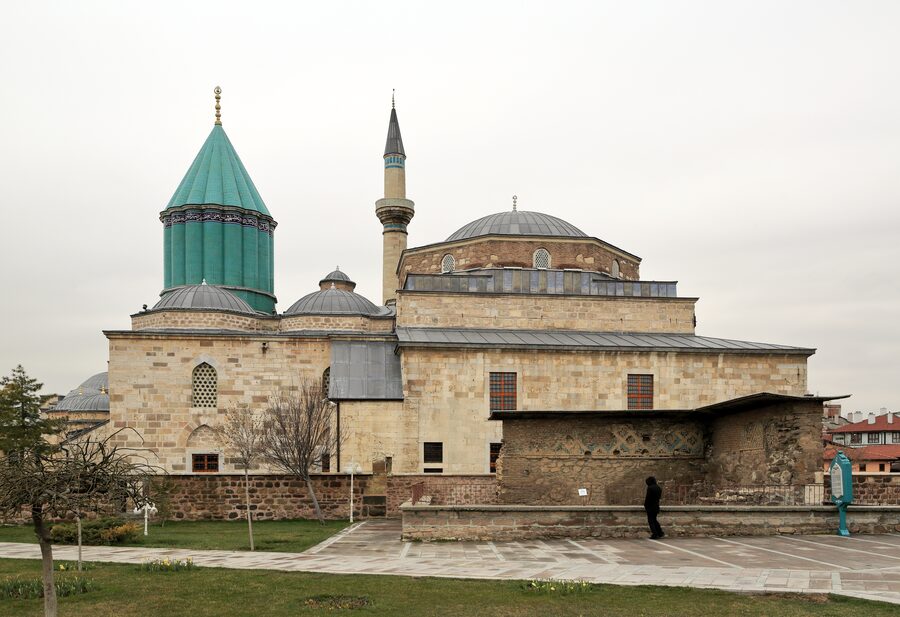
Rumi was born in Balkh, in Greater Khorasan, and after the Mongol invasion his family migrated westward, settling at last in Konya in Anatolia. His encounter with Shams of Tabriz transformed him and released the spring of his poetry and of sama, the ecstatic dance. The Mevlevi order of "whirling dervishes" descends from his circle.
Today Rumi is among the most widely read poets in the world, translated into dozens of languages. For the diaspora reader, the Masnavi is both a link to Iran's spiritual heritage and a universal tongue in which to speak of love and humanity with anyone.
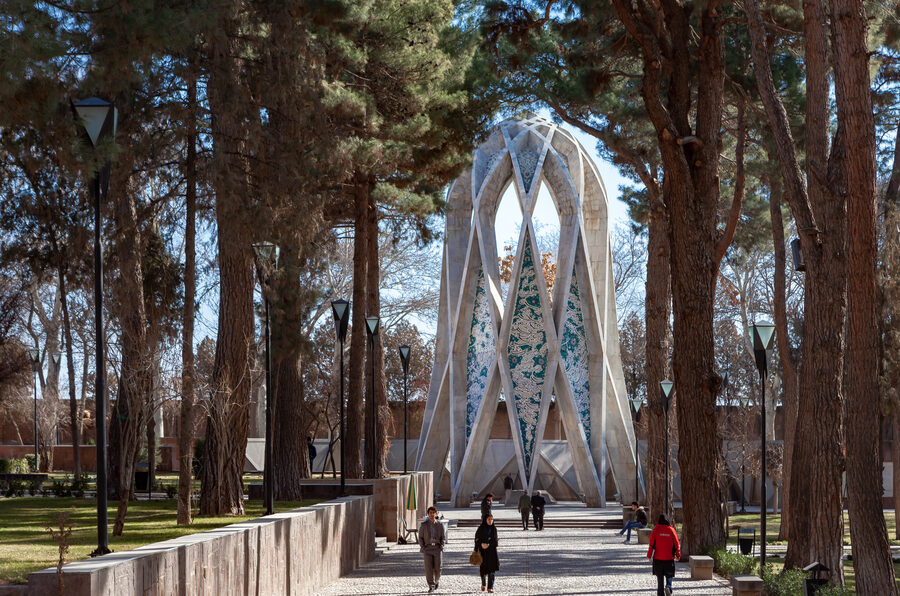
Photo: Falk2, CC BY-SA 4.0, via Wikimedia Commons